



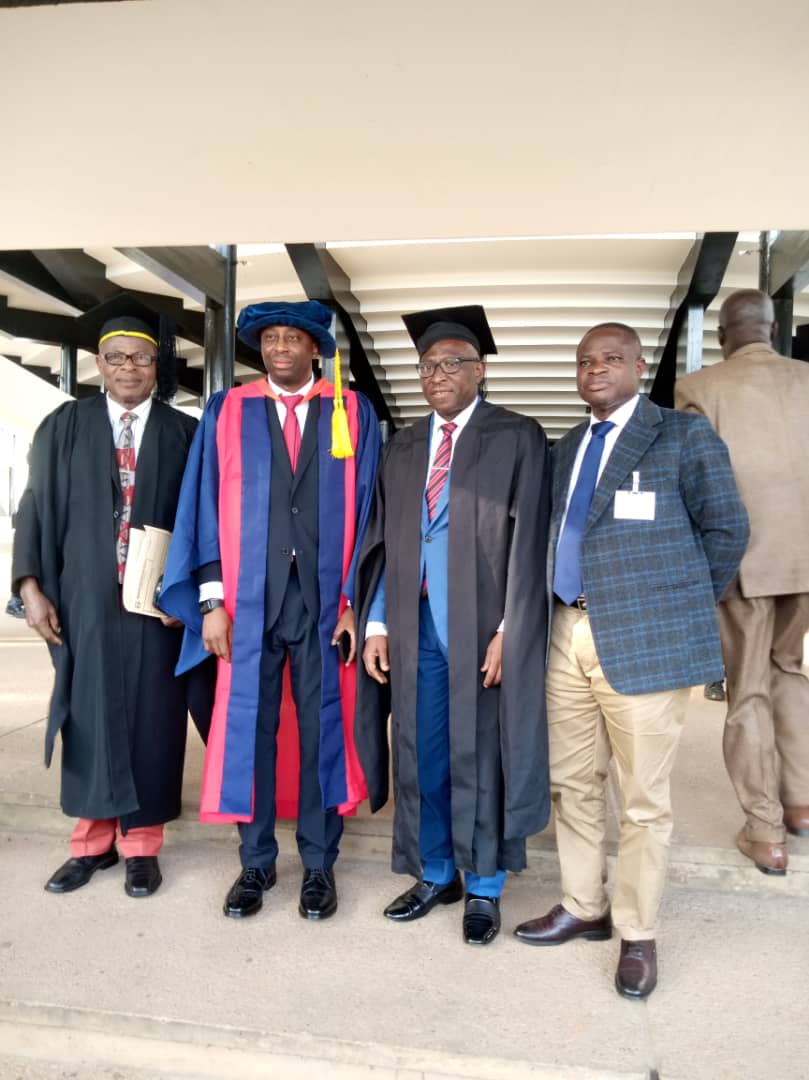
Professor of Migration and Development Sociology at Obafemi Awolowo University (OAU), Ile-Ife, Prof. Adebusuyi Adeniran, has called for the urgent rebranding and structural reform of the Nigeria Immigration Service (NIS) to align with global migration management standards and maximize its statutory responsibilities.
Prof. Adeniran made the call on Tuesday while delivering the 407th Inaugural Lecture of the university at Oduduwa Hall, Ile-Ife, themed “Migralusion: A Mix-Transnational Theory of ‘Japa’ Culture.”
The don emphasized that the NIS must evolve beyond routine passport issuance to become a fully functional migration and border management institution.
“Immigration’s data management is only one aspect of its responsibilities. The Service should lead in border security, emigration, policy development, implementation, and advisory functions,” he said.
He argued that the Service should focus on regulating and controlling passport issuance rather than handling the process directly, adding that its reformation is long overdue.
Highlighting the economic value of migration, Adeniran described cross-border and transnational migration as potential national assets capable of contributing significantly to Nigeria’s Gross National Income (GNI) and Gross Domestic Product (GDP).
“Countries such as Sri Lanka and the Philippines have successfully integrated migration into their national development strategies,”
“Nigeria must follow suit through structural reforms and sound policy direction.” he noted.
The scholar therefore urged the Federal Government to rename the NIS to better capture its constitutional duties, suggesting titles such as Nigeria Migration and Border Service (NMBS) or Nigeria Migration and Border Security (NMBS).
Prof. Adeniran also decried the proliferation of Ministries, Departments, and Agencies (MDAs) with overlapping migration-related mandates, describing it as a major obstacle to efficient administration.
He recommended the merger of all migration functions under a strengthened immigration framework, with the National Commission for Refugees, Migrants, and Internally Displaced Persons (NCFRMI) restructured as a Department of Internal Migration within the NIS.
“With adequate training, funding, and equipment, the NIS can perform optimally without the confusion caused by multiple agencies,” he said.
The professor further advocated for the inclusion of migration studies in Nigeria’s education curriculum, from primary school to tertiary levels, to foster awareness among young citizens.
He also proposed the creation of migration clinics across all 774 local government areas in Nigeria to provide free counselling, enlightenment, and monitoring services for prospective migrants, particularly the youth.
“Such clinics should be accessible and business-friendly for all categories of people. They will reduce the risks associated with unstructured migration,” he added.